
LSU Baseball Workout Program: A Comprehensive Overview (2026)
LSU’s 2026 program builds upon recent championship success, differing significantly from 2024, with spring training underway and a focus on consistent winning strategies.
The LSU Baseball program’s training philosophy centers around a holistic approach, prioritizing not just athletic development, but also mental fortitude and academic success. Coach Jay Johnson emphasizes a culture of relentless pursuit of excellence, acknowledging the distinct landscape of the 2026 team compared to the championship squads of prior years. While defending titles presents a common thread, the program’s methodology adapts to the unique strengths and weaknesses of each roster.
A core tenet is fostering adaptability and a “winning mindset,” enabling players to thrive under pressure. The program doesn’t simply replicate past successes; it evolves, constantly refining techniques based on data analysis and modern baseball principles. Spring training, currently underway, signifies a crucial phase where foundational elements are reinforced and individualized development plans are implemented. LSU aims to build players capable of consistently performing at a high level, mirroring the program’s recent achievements and striving for continued dominance in collegiate baseball. This involves a commitment to rigorous training, strategic game planning, and a supportive team environment.
Historical Success & Program Evolution (2024-2026)
LSU Baseball has experienced a remarkable period of success, securing two national championships in the last three years – a feat not seen since the early 1970s Southern California teams. The 2024 championship served as a benchmark, but Coach Jay Johnson recognizes significant differences between that team and the current 2026 roster. This isn’t simply a matter of reloading; it’s about evolving the program’s identity and adapting to new talent.
The program’s evolution from 2024 to 2026 reflects a commitment to continuous improvement. While the winning culture remains paramount, the specific strategies and training methodologies are tailored to maximize the potential of each individual team. Early success in the 2026 season, including multiple series wins, demonstrates the effectiveness of this adaptive approach. LSU’s ability to “find a way to win” consistently highlights a program built on resilience, strategic thinking, and a dedication to excellence, positioning them as a perennial contender in collegiate baseball.
Key Coaching Staff & Their Impact on Training
The success of LSU Baseball is deeply intertwined with the expertise and vision of its coaching staff, led by Head Coach Jay Johnson. Johnson’s leadership emphasizes a dynamic approach to training, recognizing the distinct differences between championship-caliber teams, as seen in the evolution from the 2024 to the 2026 squads. His philosophy centers on adapting strategies to maximize the potential of each roster.
Beyond Johnson, the assistant coaches play crucial roles in skill development and player mentorship. Their collective expertise shapes the on-field training, focusing on refining hitting mechanics, fielding techniques, and pitching prowess. The coaching staff’s commitment extends to fostering a winning mentality and instilling a relentless pursuit of improvement. This collaborative environment, combined with a data-driven approach to player evaluation, ensures that the training program remains at the forefront of collegiate baseball, consistently producing high-performing athletes and championship contenders.
Strength and Conditioning Program
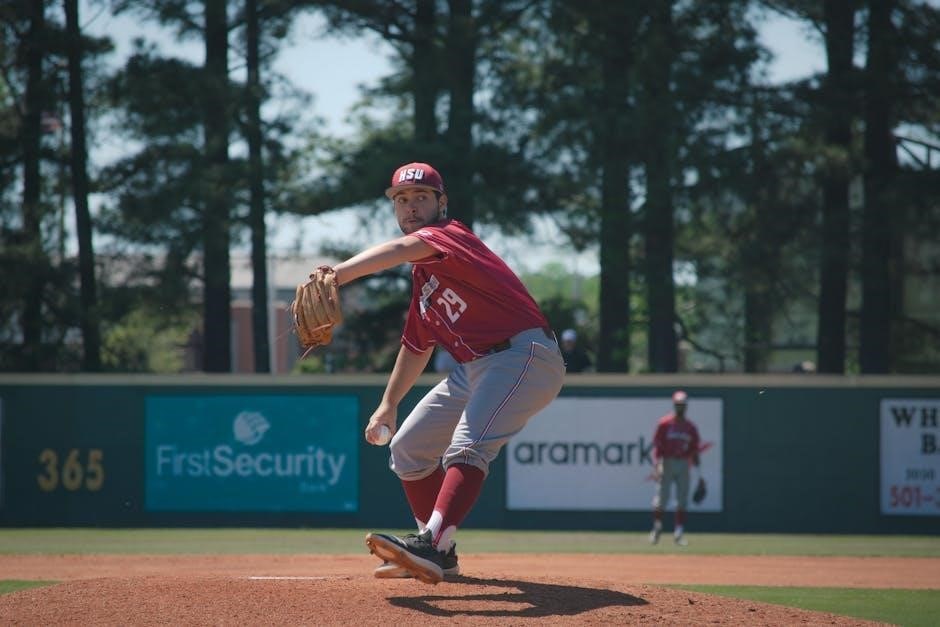
LSU’s program prioritizes year-round physical development, adapting training intensity between off-season gains and in-season maintenance to optimize player performance and prevent injuries.
Off-Season Strength Training Focus
The LSU baseball off-season strength program, commencing after the conclusion of the competitive season, centers on building a robust foundation of strength and power. This phase prioritizes maximal strength gains through heavy compound lifts, aiming to increase overall muscle mass and enhance athletic capabilities. Key components include a structured weightlifting regimen focusing on exercises like squats, deadlifts, bench presses, and overhead presses.
Beyond maximal strength, the program incorporates explosive power development through plyometrics and Olympic lifting variations. These exercises improve rate of force development, crucial for hitting with power and generating quickness on the field. Core stability is also heavily emphasized, utilizing exercises that strengthen the abdominal and lower back muscles, providing a stable base for all athletic movements.
Furthermore, the off-season program addresses muscle imbalances and movement deficiencies through targeted accessory work. This ensures proper biomechanics and reduces the risk of injury. A progressive overload principle is applied, gradually increasing the weight, sets, or reps over time to continually challenge the athletes and promote adaptation. The ultimate goal is to prepare players physically for the demands of pre-season training and the upcoming competitive season.
In-Season Strength Maintenance
Maintaining strength during the demanding LSU baseball season requires a strategic shift from the off-season’s focus on maximal gains. The in-season program prioritizes preserving existing strength levels while minimizing fatigue and preventing overtraining. Weightlifting sessions are reduced in frequency and volume, typically consisting of 2-3 sessions per week.
The emphasis shifts towards maintaining power and explosiveness through lighter weights and higher velocities of movement. Compound lifts are still included, but with reduced intensity and a focus on proper technique. Accessory exercises are tailored to address individual needs and prevent muscle imbalances that may arise due to the repetitive nature of baseball activities.
Recovery becomes paramount during this phase, with active recovery modalities like foam rolling and stretching incorporated into the routine. The program is carefully periodized to align with the game schedule, reducing intensity during periods of high game volume and increasing it during off-days. The goal is to ensure players remain strong, powerful, and resilient throughout the long season, contributing to peak performance on the field.
Weightlifting Exercises: Core Lifts
The foundation of LSU’s strength program revolves around several core lifts designed to build overall strength and power crucial for baseball performance. The Back Squat is a primary exercise, developing lower body strength essential for hitting and fielding. Variations like Front Squats are also incorporated to emphasize quad development and improve core stability.
The Bench Press is vital for upper body pushing strength, directly translating to bat speed and throwing velocity. Deadlifts, performed with strict form, build posterior chain strength, contributing to explosive movements. Overhead Press develops shoulder strength and stability, important for throwing mechanics and preventing injuries.
Power Cleans and variations are included to enhance explosive power and athleticism. These lifts require proper technique and are often supervised closely by strength coaches. Throughout these core lifts, progressive overload is applied, gradually increasing weight or resistance to continually challenge the athletes and promote strength gains.
Weightlifting Exercises: Accessory Work
Complementing the core lifts, LSU’s program incorporates a robust selection of accessory exercises targeting specific muscle groups and movement patterns. Dumbbell variations of core lifts, like dumbbell bench press and Romanian deadlifts, address muscle imbalances and improve stability. Pull-ups and chin-ups build upper body pulling strength, crucial for rotational power during hitting and throwing.
Rows, utilizing barbells or dumbbells, further develop back strength and posture. Lunges and split squats enhance lower body strength and address unilateral imbalances. Core work is prioritized with exercises like planks, Russian twists, and medicine ball throws, improving rotational power and stability.
Band work, including lateral band walks and rotator cuff exercises, focuses on injury prevention and shoulder health. These accessory exercises are strategically programmed to support the core lifts, address weaknesses, and enhance overall athletic performance, ensuring a well-rounded strength development program.
On-Field Training & Skill Development
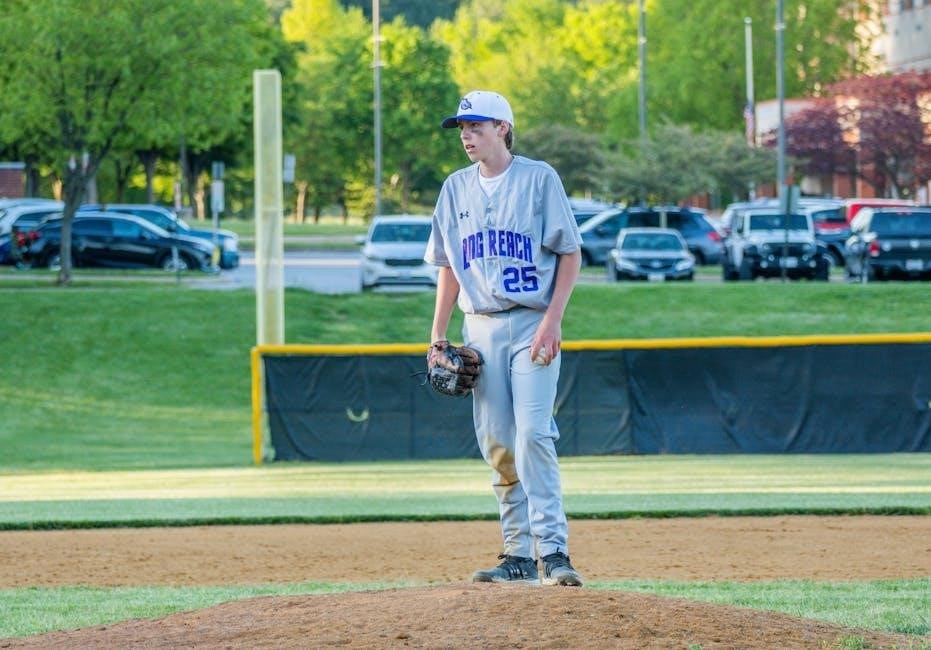
LSU’s on-field work emphasizes hitting for power and contact, fielding drills for both infielders and outfielders, and refining pitching mechanics for optimal performance.
Hitting Drills: Power & Contact
LSU’s hitting development centers around a blend of drills designed to maximize both power and consistent contact. Early in training, emphasis is placed on tee work and soft toss, focusing on proper swing mechanics, bat path, and hand-eye coordination. These foundational drills build a solid base for more advanced techniques.
As players progress, drills incorporate live batting practice with varying velocities and pitch locations. Coaches utilize pitching machines to simulate game-like scenarios, challenging hitters to adjust and react quickly. Specific drills target hitting to all fields, preventing pull-side tendencies and promoting balanced offensive approaches.

Power development drills include weighted bat swings and resistance band exercises, strengthening the core and upper body. Contact drills emphasize shortening the swing, using opposite-field hitting, and bunting techniques. LSU’s approach isn’t solely about home runs; it’s about consistently putting the ball in play and capitalizing on scoring opportunities. Regular video analysis provides hitters with visual feedback, allowing them to refine their technique and address weaknesses. The ultimate goal is to create a lineup of hitters capable of both driving the ball with authority and consistently making contact in crucial situations.
Fielding Drills: Infield & Outfield
LSU’s fielding program meticulously develops both infield and outfield skills, prioritizing agility, quick reactions, and accurate throwing. Infield drills begin with fundamental ground ball work, emphasizing proper footwork, glove positioning, and smooth transitions to throwing. Short hops, slow rollers, and double-play scenarios are consistently practiced to prepare players for diverse game situations.
Outfield drills focus on tracking fly balls, charging ground balls, and making accurate throws to bases. Drills incorporate varying distances and angles, challenging outfielders to read the ball off the bat and react accordingly. Communication is heavily emphasized, with drills designed to improve relay throws and prevent collisions.

Advanced drills include simulated game scenarios, requiring quick decision-making and precise execution. LSU coaches utilize radar guns to measure throwing velocity and accuracy, providing players with quantifiable feedback. Agility drills, such as cone drills and shuttle runs, enhance foot speed and lateral movement. The program aims to cultivate a defense that is not only fundamentally sound but also instinctively reactive and consistently reliable, contributing significantly to LSU’s winning tradition.
Pitching Mechanics & Development
LSU’s pitching development program centers on biomechanical efficiency and maximizing each pitcher’s individual potential. Initial assessments analyze existing mechanics, identifying areas for improvement in terms of posture, arm slot, and leg drive. Drills focus on establishing a consistent delivery, promoting a fluid motion that minimizes stress and maximizes velocity.
Emphasis is placed on developing a repeatable delivery, crucial for command and control. LSU utilizes video analysis extensively, allowing pitchers to visualize their mechanics and make necessary adjustments. Strength and conditioning programs are tailored to enhance pitching-specific muscles, improving both power and endurance.
Beyond mechanics, LSU’s program stresses pitch sequencing and game strategy. Pitchers work on developing a diverse repertoire, including fastballs, breaking balls, and changeups, learning to effectively utilize each pitch in different counts and situations. Bullpen sessions are meticulously structured, simulating game pressure and focusing on pitch location and mental toughness. The ultimate goal is to cultivate a pitching staff capable of dominating opponents through precision, power, and strategic acumen.
Bullpen Workouts & Pitch Count Management
LSU’s bullpen workouts are designed to progressively build arm strength and refine pitching skills under simulated game conditions. Sessions begin with flat ground work, focusing on mechanics and warm-up, before transitioning to mound work with increasing intensity. Pitchers execute specific pitch sequences, mirroring in-game scenarios, and receive immediate feedback from coaches.
Pitch count management is paramount, guided by a data-driven approach that considers individual pitcher workload, recovery rates, and upcoming schedule demands. LSU employs a detailed tracking system, monitoring pitch counts, velocity, and movement throughout each outing. Recovery days are strategically incorporated to prevent overuse injuries and maintain peak performance.
Bullpen sessions aren’t solely about throwing; mental preparation is also emphasized. Pitchers practice working quickly, handling pressure situations, and executing pitches with confidence. The program aims to develop a resilient pitching staff capable of consistently delivering quality performances, while prioritizing long-term health and sustainability.

Workout Schedule & Periodization
LSU’s training follows a periodized schedule, encompassing fall training, pre-season preparation, and an in-season routine designed for peak performance and sustained success.
Fall Training Schedule Breakdown

The LSU Baseball fall training program, commencing after the academic break, prioritizes foundational development and player evaluation. Initial weeks focus heavily on conditioning – building a base of strength and endurance crucial for the demanding season ahead. These sessions incorporate both individual and team workouts, emphasizing agility drills and cardiovascular fitness.
As fall progresses, the emphasis shifts towards skill refinement. Hitting drills concentrate on mechanics and power development, while fielding work hones defensive techniques across all positions. Pitchers begin arm care protocols and gradually increase throwing volume, focusing on mechanics and command; Bullpen sessions are introduced later in the fall, with a controlled approach to workload management.
Scrimmages become increasingly frequent, providing valuable game-like experience and allowing coaches to assess player performance. These scrimmages aren’t just about winning; they’re about identifying areas for improvement and solidifying team chemistry. The fall culminates in a series of intra-squad games, simulating competitive scenarios and preparing players for the rigors of the spring season. Throughout the fall, academic progress is closely monitored, ensuring a balance between athletic and scholastic commitments.
Pre-Season Training Schedule (January ― February)
The January-February pre-season phase intensifies preparations for the upcoming campaign, building upon the foundation established during fall training. Workouts transition to a more game-specific focus, mirroring the anticipated demands of the regular season. Strength and conditioning programs become more explosive, emphasizing power development and quickness.
Hitting drills evolve to incorporate advanced techniques, focusing on situational hitting and hitting with runners in scoring position. Fielding drills emphasize quick reactions, accurate throws, and efficient defensive movements. Pitchers continue to build arm strength and refine their pitch repertoire, with increased bullpen volume and simulated game scenarios.
Live batting practice and full-field scrimmages become commonplace, allowing players to fine-tune their skills under pressure. Coaches closely evaluate player performance, making adjustments to lineups and defensive strategies. This period also includes significant video analysis, providing players with visual feedback on their mechanics and techniques. Mental preparation is also prioritized, with sessions focused on building confidence and resilience. The pre-season culminates in exhibition games, providing a final opportunity to assess readiness before the start of the regular season.
In-Season Workout Routine (March ― May)
The March-May in-season routine prioritizes maintaining peak performance amidst a demanding game schedule. Strength training shifts from building to maintenance, focusing on short, intense sessions designed to prevent muscle loss and maintain power. Workouts are strategically scheduled around games, emphasizing recovery and injury prevention.
Hitting drills concentrate on refining mechanics and addressing individual weaknesses identified during game play. Fielding drills emphasize game-like scenarios, focusing on quick reactions and efficient movements. Pitchers adhere to strict pitch count management protocols, with bullpen sessions designed to maintain arm strength and refine command.
Active recovery becomes crucial, incorporating techniques like foam rolling, stretching, and light cardio. Nutrition and hydration are closely monitored to optimize energy levels and promote recovery. Coaches utilize data analytics to track player fatigue and adjust workloads accordingly. Mental skills training continues, focusing on maintaining focus and managing pressure. The goal is to sustain high performance levels throughout the long season, building upon the foundation established during pre-season training.

Nutrition & Recovery
Optimal performance hinges on a tailored diet, consistent hydration, and strategic recovery protocols. LSU prioritizes these elements to minimize fatigue and maximize player health throughout the season.
LSU Baseball Diet Guidelines
LSU’s baseball program emphasizes a performance-focused diet, prioritizing nutrient timing and macronutrient balance to fuel intense training and competition. Players adhere to guidelines designed to optimize energy levels, promote muscle recovery, and maintain overall health. A significant focus is placed on lean protein sources – chicken, fish, and lean beef – to support muscle repair and growth, crucial for the demands of the sport.
Complex carbohydrates, such as whole grains, sweet potatoes, and fruits, provide sustained energy throughout practices and games. Healthy fats, found in avocados, nuts, and olive oil, are incorporated for hormone production and overall well-being. The program discourages processed foods, sugary drinks, and excessive saturated fats. Individualized nutrition plans are developed in consultation with the team’s registered dietitian, taking into account each player’s position, body composition, and training load.
Pre-game meals focus on easily digestible carbohydrates and moderate protein, while post-game nutrition prioritizes rapid glycogen replenishment and muscle recovery. Regular monitoring of hydration status is also a key component, ensuring players maintain optimal fluid balance for peak performance.
Importance of Hydration for Performance
Optimal hydration is paramount within the LSU baseball program, directly impacting player performance, endurance, and cognitive function. Dehydration, even at a mild level, can significantly diminish athletic capabilities, leading to reduced power, decreased reaction time, and increased risk of cramping. LSU’s protocols emphasize proactive hydration strategies, extending beyond simply drinking when thirsty.
Players are educated on recognizing the early signs of dehydration – fatigue, headache, and decreased urine output – and are encouraged to consistently replenish fluids throughout the day, especially before, during, and after training sessions and games. Water is the primary hydration source, supplemented with electrolyte-rich beverages to replace sodium and potassium lost through sweat.

The team utilizes individualized hydration plans, considering factors like sweat rate, environmental conditions, and exercise intensity. Regular monitoring of urine color and body weight helps assess hydration status. Maintaining proper hydration isn’t merely about performance; it’s integral to player safety and preventing heat-related illnesses during the demanding Louisiana climate.
Recovery Protocols: Active Recovery & Rest
LSU’s recovery protocols are meticulously designed to optimize player restoration and minimize injury risk, recognizing the intense physical demands of a championship-caliber baseball season. The program integrates both active recovery techniques and dedicated rest periods, understanding that recovery is as crucial as training itself.
Active recovery sessions, implemented on off-days and post-game, involve low-intensity activities like light jogging, swimming, or cycling to promote blood flow and reduce muscle soreness. These sessions aid in clearing metabolic waste products, accelerating tissue repair. Contrast therapy – alternating between hot and cold applications – is also utilized to reduce inflammation and enhance recovery.
Alongside active recovery, LSU prioritizes sufficient sleep, aiming for 8-10 hours nightly. Strategic rest days are incorporated into the weekly schedule, allowing players to fully recover physically and mentally. The coaching staff emphasizes the importance of proper nutrition and hydration in supporting the recovery process, ensuring players are adequately fueled for optimal restoration.
Injury Prevention Strategies
LSU’s injury prevention program is a proactive, multi-faceted approach designed to safeguard player health and maximize on-field availability throughout the demanding season. Recognizing the repetitive stresses inherent in baseball, the program emphasizes preventative measures integrated into all facets of training and competition.
A core component is a comprehensive dynamic warm-up routine performed before every practice and game, focusing on joint mobility, muscle activation, and neuromuscular control. This prepares the body for the specific demands of baseball movements. Regular soft tissue work, including foam rolling and massage, addresses muscle imbalances and reduces tightness.
The strength and conditioning program incorporates exercises to strengthen stabilizing muscles, particularly in the shoulder, core, and lower body, enhancing joint stability and reducing the risk of overuse injuries. Proper throwing mechanics are continuously reinforced by the coaching staff, minimizing stress on the arm. LSU also utilizes workload monitoring to prevent overtraining and fatigue, key contributors to injury.