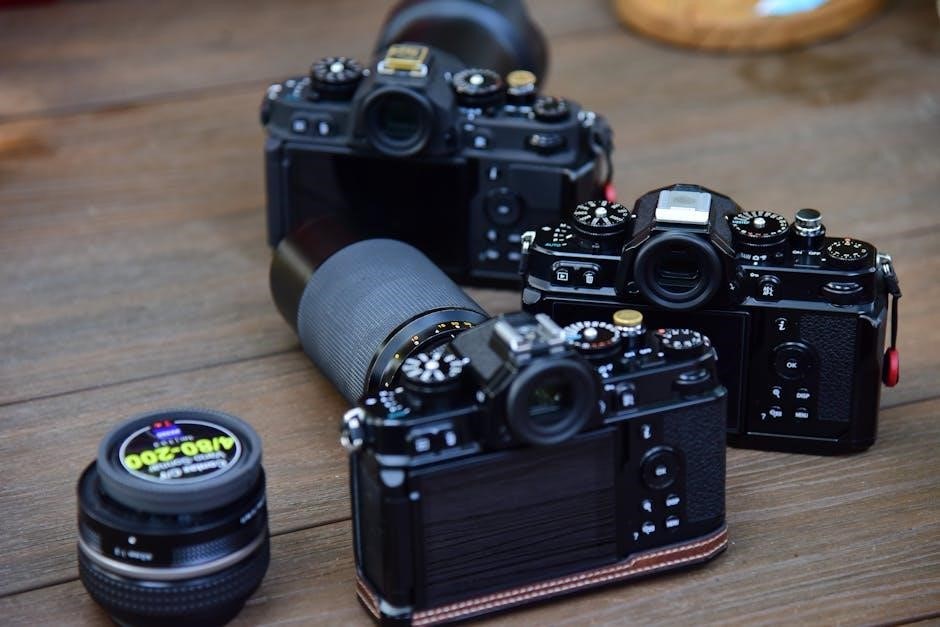
The Nikon D810 manual provides a comprehensive guide, exploring every function for optimal setup based on individual shooting preferences and techniques.
This resource extends beyond the camera, offering foundational photography knowledge alongside detailed explanations of each control and setting.
What is the Nikon D810?
The Nikon D810 is a professional-grade, full-frame digital SLR camera renowned for its exceptional 24.3-megapixel resolution and dynamic range. It’s designed for photographers demanding high image quality and performance.
This camera boasts a robust build, advanced autofocus system, and versatile features, making it suitable for diverse photographic genres. The d810 manual details how to unlock its full potential, covering everything from basic operation to advanced customization. It’s a tool for both seasoned professionals and enthusiastic amateurs seeking to elevate their craft.
Target Audience for this Manual
This d810 manual is crafted for a broad spectrum of Nikon D810 users. It caters to photographers transitioning from other systems, as well as those new to full-frame digital SLRs.
Experienced photographers will benefit from in-depth explorations of advanced features and customization options. Beginners will find clear, user-friendly guidance on fundamental camera operations and basic photographic techniques. The manual’s approachable style ensures a comfortable learning experience for all skill levels, fostering confidence and creative exploration.
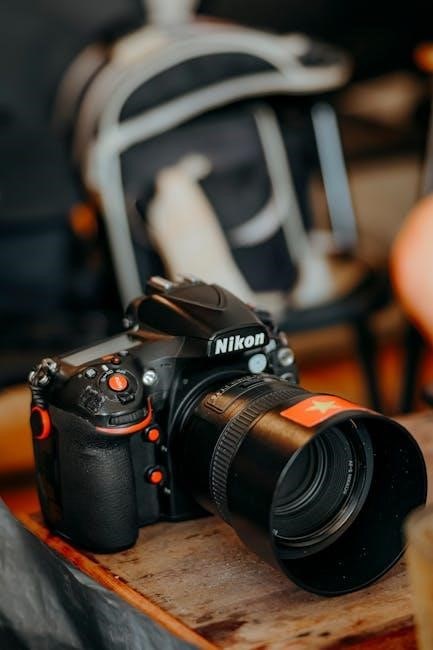
Camera Body and Controls
The D810 manual details the physical layout, buttons, dials, and switches, offering a user-friendly exploration of the camera’s design and functionality.
Physical Overview of the D810
The D810’s robust build quality is immediately apparent, designed for professional use and durability. The camera body features a secure grip, enhancing handling during extended shoots. A detailed examination reveals the placement of essential controls – the mode dial, shutter button, and various customizable buttons.
The rear panel houses the high-resolution LCD screen and navigational controls, facilitating easy menu access and image review. Understanding the physical layout, as outlined in the D810 manual, is crucial for efficient operation and a seamless shooting experience. The pop-up flash is also manually activated.
Buttons, Dials, and Switches Explained
The D810 manual meticulously details each control. The mode dial selects shooting modes – Programmed Auto, Aperture-priority, Shutter-priority, and Manual – offering varying levels of creative control. Dials adjust aperture, shutter speed, and exposure compensation, providing precise adjustments.
Numerous customizable buttons allow personalized workflow optimization. Switches control features like focus mode and drive mode. Understanding these elements, as the guide explains, unlocks the camera’s full potential, enabling photographers to quickly adapt to diverse shooting scenarios and achieve desired results.
Menu System Navigation
The D810 manual emphasizes mastering the menu system for complete camera control. Organized into categories – Shooting, Display, Setup, and Custom Settings – the menus offer extensive customization options. Navigating with the multi-selector and dials, users can adjust image quality, autofocus settings, and various camera functions.
The guide highlights efficient menu access and explains each setting’s impact. Understanding this structure is crucial for tailoring the D810 to individual shooting styles and maximizing its capabilities, ensuring a streamlined workflow.
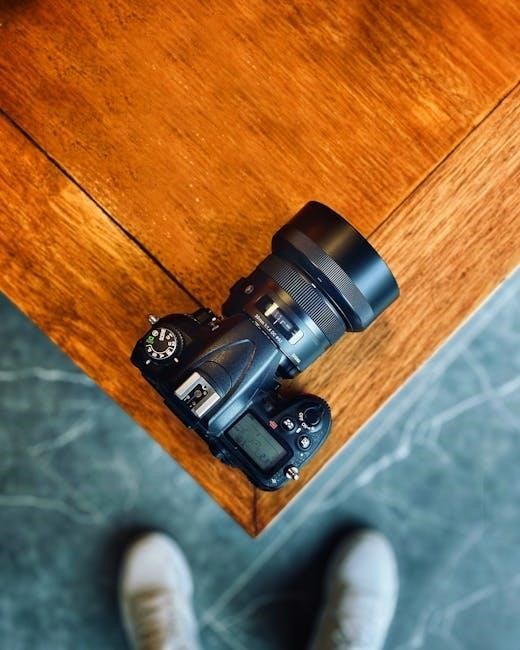
Exposure Modes
The D810 manual details four key exposure modes: Programmed Auto, Aperture-priority, Shutter-priority, and Manual, offering varying levels of control.
Programmed Auto (P) Mode
Programmed Auto (P) mode on the Nikon D810, as detailed in the D810 manual, allows the camera to automatically select both aperture and shutter speed for optimal exposure.
This mode provides a balance between convenience and creative control, letting photographers focus on composition and subject matter. While the camera handles the technical settings, users can still adjust ISO, exposure compensation, and white balance.
It’s a versatile option for various shooting scenarios, offering a good starting point for beginners and a quick solution for experienced photographers.
Aperture-Priority Auto (A) Mode
The D810 manual explains that Aperture-Priority Auto (A) mode empowers photographers to control depth of field by selecting the aperture (f-stop), while the camera automatically determines the appropriate shutter speed for correct exposure.
This mode is ideal for portraits, landscapes, and situations where controlling background blur is crucial. Users can prioritize creative effects, and the camera ensures a properly exposed image.
ISO and exposure compensation remain adjustable, offering further refinement of the final result.
Shutter-Priority Auto (S) Mode
According to the D810 manual, Shutter-Priority Auto (S) mode allows photographers to dictate the shutter speed, freezing motion or creating motion blur, while the camera calculates the corresponding aperture for proper exposure.
This mode excels in sports, wildlife, or any scenario demanding control over how movement is captured. Photographers can prioritize capturing a specific moment in time or intentionally blurring moving subjects.
ISO and exposure compensation provide additional control over the image’s final appearance.
Manual (M) Mode
The D810 manual details that Manual (M) mode grants the photographer complete control over both shutter speed and aperture, demanding a thorough understanding of the exposure triangle. This mode is ideal for challenging lighting conditions or when a specific creative vision requires precise settings.
Photographers must independently balance these settings to achieve the desired exposure, utilizing the camera’s light meter as a guide. Mastering Manual mode unlocks full creative potential.
ISO can also be adjusted for further control.
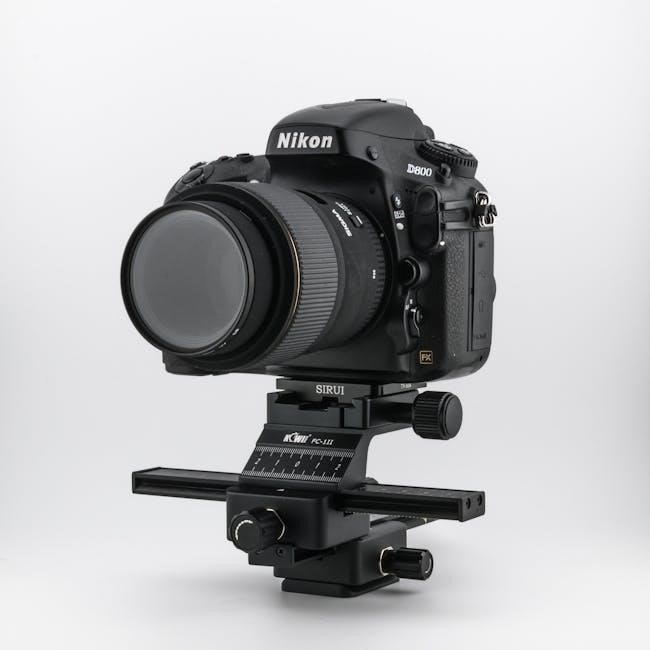
Autofocus System
The D810 manual explains its advanced autofocus, offering various modes and settings for precise focus area selection and sophisticated techniques.
Autofocus Modes and Settings
The D810 manual details a robust autofocus system, crucial for capturing sharp images. It outlines Single-point AF, Dynamic-area AF (with varying numbers of focus points), Group-area AF, and Auto-area AF modes.
Settings include AF-S (single servo), AF-C (continuous servo), and AF-A (automatic servo) modes, adapting to different subjects. Understanding these options allows photographers to prioritize speed or accuracy, tailoring the autofocus performance to specific shooting scenarios and ensuring optimal results.
Focus Area Selection
The D810 manual explains precise focus area selection, vital for pinpoint accuracy. Users can choose from 51 focus points, customizing the AF area mode to suit the subject and composition.
Options include single-point AF for static subjects, dynamic-area AF for tracking moving objects, and auto-area AF for general use. The manual details how to shift the focus point quickly using the directional pad, ensuring critical sharpness where intended, and maximizing image quality.
Advanced Autofocus Techniques
The D810 manual delves into advanced autofocus techniques for challenging scenarios. It explains utilizing the AF-C mode with dynamic-area AF for consistently tracking erratic movement, crucial for sports or wildlife photography.
The guide details customizing the AF sensitivity to react faster or slower, adapting to subject speed. Furthermore, it covers focus lock-on functionality, ensuring the camera maintains focus even with temporary obstructions, resulting in consistently sharp and captivating images.
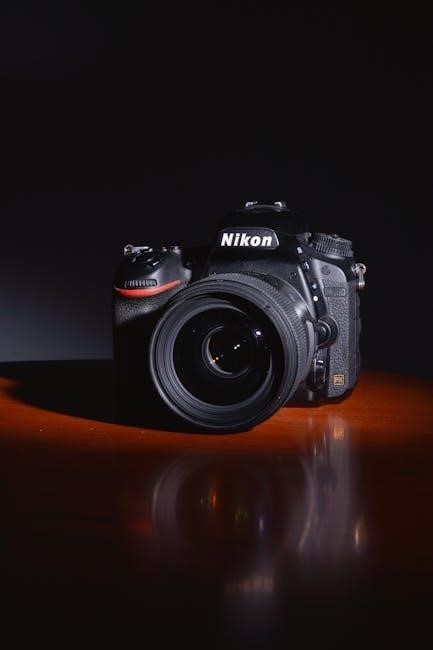
Image Quality and File Formats
The D810 manual details both NEF (RAW) and JPEG file formats, alongside comprehensive image size and quality settings for diverse photographic needs.
NEF (RAW) File Format
The D810 manual extensively covers the NEF (RAW) file format, emphasizing its importance for maximum editing flexibility. Unlike JPEGs, NEF files retain all image data captured by the sensor, allowing for non-destructive adjustments to white balance, exposure, and color.
This format is ideal for photographers who prioritize post-processing control and archival quality. The manual details how to access and utilize the full potential of RAW files with compatible software, ensuring optimal results for professional workflows and demanding projects. It’s a cornerstone for serious photographers.
JPEG File Format
The D810 manual explains the JPEG file format as a compressed image option, offering convenience and smaller file sizes. JPEGs are suitable for quick sharing and situations where extensive editing isn’t required. However, the manual clarifies that JPEG compression results in some data loss, impacting editing latitude.
Users can select various JPEG quality settings, balancing file size against image detail. The guide details when to choose JPEG over RAW, emphasizing its practicality for everyday photography and immediate use, while acknowledging RAW’s superior quality.
Image Size and Quality Settings
The D810 manual details extensive image size and quality options, allowing photographers to tailor settings to their specific needs. Users can choose from Large, Medium, and Small image sizes, impacting file resolution and print capabilities. Quality settings within each size determine compression levels, influencing file size and detail retention.
The guide explains the trade-offs between larger files (more detail) and smaller files (easier storage/sharing). It advises selecting settings based on intended use – high resolution for prints, lower resolution for web display.
Flash Photography
The D810 manual covers built-in flash features, compatibility with external flashes, and various flash modes for diverse lighting scenarios and creative control.
Built-in Flash Features
The Nikon D810 manual details the functionality of its pop-up flash, which is manually activated. This integrated flash serves as a convenient light source for various shooting situations, offering a quick and readily available illumination option.
The guide explains how to utilize the built-in flash for fill-in light, balancing the exposure in challenging lighting conditions. It also covers its limitations and when to consider utilizing external flash units for more advanced control and power. Understanding these features allows photographers to effectively leverage the D810’s integrated flash capabilities.
External Flash Compatibility
The Nikon D810 manual thoroughly explains its compatibility with a wide range of Nikon external flash units (Speedlights). It details how to connect and utilize these flashes for enhanced lighting control, offering significantly more power and creative options than the built-in flash.
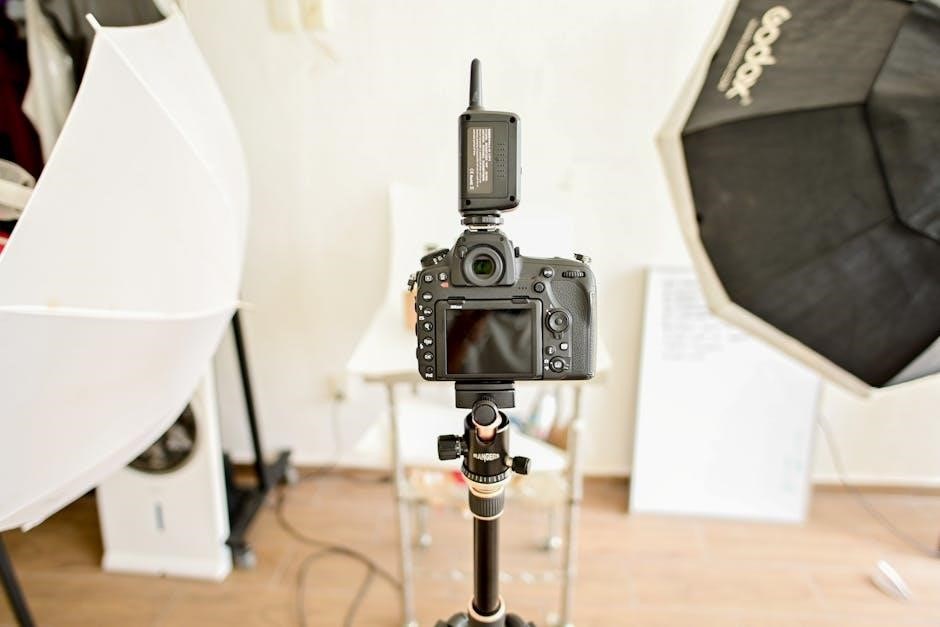
The guide covers advanced techniques like off-camera flash, utilizing wireless triggering systems, and leveraging the D810’s flash control features for precise light shaping. It emphasizes the benefits of external flashes for professional-quality results and expanded photographic possibilities.
Flash Modes and Settings
The Nikon D810 manual dedicates significant detail to its flash modes, including TTL (Through-The-Lens) for automatic exposure, manual mode for full control, and front/rear curtain sync options for creative effects. It explains how to adjust flash compensation to fine-tune exposure.
The guide clarifies settings for high-speed sync (HSS) enabling flash use at faster shutter speeds, and red-eye reduction techniques. Understanding these modes and settings is crucial for mastering flash photography and achieving desired lighting outcomes with the D810.

Shooting Settings and Customization
The D810 manual details custom function settings, picture control options, and white balance adjustments, empowering users to personalize their camera experience.
Custom Function Settings
The Nikon D810 manual extensively covers custom function settings, allowing photographers to tailor the camera’s operation to their specific needs and shooting style. These settings enable reassignment of controls, streamlining workflows and enhancing efficiency.
Users can customize button functions, dial behavior, and menu display options. This level of personalization ensures quick access to frequently used features, reducing the need to navigate complex menus during critical shooting moments. The manual guides users through each option, explaining its impact on camera performance and offering suggestions for various photographic disciplines.
Picture Control Settings
The Nikon D810 manual details the Picture Control settings, offering a powerful way to customize the look of your images directly within the camera. These presets – Standard, Neutral, Vivid, Monochrome, and others – adjust color, contrast, and sharpness.
Beyond the presets, users can fine-tune each setting, creating personalized Picture Controls for specific shooting scenarios. The manual explains how to adjust parameters like sharpness, contrast, brightness, saturation, and hue, enabling photographers to achieve their desired aesthetic without post-processing.
White Balance Adjustment
The Nikon D810 manual thoroughly explains white balance, crucial for accurate color rendition. It details automatic white balance modes, alongside presets for daylight, cloudy, shade, tungsten, and fluorescent lighting.
The guide also covers custom white balance, allowing users to precisely set the color temperature using a gray card or white object. Understanding and adjusting white balance ensures colors appear natural, preventing unwanted color casts and delivering consistently accurate results across diverse shooting conditions.
Advanced Features
The D810 manual details features like time-lapse, multiple exposure, and Live View shooting, expanding creative possibilities beyond standard photographic techniques.
Time-Lapse Photography
The Nikon D810 manual thoroughly explains time-lapse photography, enabling users to capture slow changes over extended periods. It details setting the intervalometer for customized shooting intervals, crucial for various subjects like clouds or blooming flowers.
The guide clarifies how to manage file creation – either directly in-camera as JPEGs or as a sequence of RAW images for post-processing flexibility. It also covers optimizing settings for consistent exposure throughout the time-lapse sequence, ensuring smooth and professional results.
Multiple Exposure Mode
The Nikon D810 manual dedicates a section to its Multiple Exposure mode, allowing photographers to creatively combine multiple images into a single frame. It explains the different blending options available – Additive, Average, Lighten, and Darken – and how each affects the final result.
The guide details controlling the number of shots for each multiple exposure, and whether to sequentially capture images or combine existing ones from the memory card. It also clarifies how to review and adjust the combined image before saving.
Live View Shooting
The Nikon D810 manual thoroughly covers Live View shooting, detailing how to activate it and utilize its benefits for precise composition and focusing. It explains the various display options available, including exposure simulation and focus peaking for critical sharpness.
The guide clarifies the advantages of Live View for macro photography and tripod-based shooting, alongside potential considerations like sensor heating during prolonged use. It also details how to adjust settings and utilize the Live View controls effectively.

Troubleshooting Common Issues
The D810 manual assists in resolving focusing, exposure, and connectivity problems, offering practical solutions and guidance for a smooth shooting experience.
Focusing Problems
The D810 manual details autofocus modes and settings, crucial for sharp images. If experiencing issues, verify the selected focus area mode aligns with your subject and scene.
Ensure sufficient light for accurate autofocus operation; low light can hinder performance. Explore advanced techniques like back-button focus for greater control; Check lens compatibility and confirm the lens is properly mounted.
Refer to the manual’s section on autofocus fine-tuning to calibrate lenses for optimal sharpness, especially with third-party lenses. Regularly clean the autofocus sensor to remove dust or debris.
Exposure Issues
The D810 manual explains four exposure modes: Programmed Auto, Aperture-Priority, Shutter-Priority, and Manual. Incorrect settings can lead to over or underexposed images.
Verify your chosen mode matches your creative intent. In Auto modes, utilize exposure compensation to fine-tune brightness. When using Manual mode, carefully balance aperture, shutter speed, and ISO.
Check your metering mode (Matrix, Center-weighted, Spot) to ensure it accurately assesses the scene’s light. Review the histogram to evaluate tonal distribution and avoid clipping highlights or shadows.
Connectivity Problems
The D810 manual details connecting to computers and other devices. Issues often arise from incorrect cable connections or outdated software. Ensure the USB cable is securely connected to both the camera and computer.
Verify necessary drivers are installed and up-to-date on your computer. Check camera settings for USB connection mode (e.g., MTP, PTP). For wireless transfer, confirm correct network settings and password entry.
Restart both the camera and computer if connection persists. Consult Nikon’s website for troubleshooting guides and driver downloads.
Maintenance and Care
The D810 manual stresses regular cleaning of the camera body and lenses, alongside proper battery management, to ensure longevity and optimal performance.
Cleaning the Camera Body
The Nikon D810 manual recommends using a soft, dry cloth to wipe the camera body, avoiding harsh chemicals or abrasive cleaners. For stubborn smudges, a slightly dampened cloth can be used, ensuring no liquid enters openings.
Pay particular attention to the LCD screen, using a specialized screen cleaner if necessary. Regularly blowing away dust from crevices prevents buildup. Avoid excessive force when cleaning, and always power off the camera before commencing any cleaning procedure to prevent damage or electrical shock. Consistent, gentle cleaning maintains the D810’s appearance and functionality.
Lens Care
The Nikon D810 manual emphasizes the importance of protecting lens elements. Use a blower to remove loose dust and debris before wiping. Employ lens cleaning tissue and a dedicated lens cleaning solution for fingerprints or smudges, applying gentle circular motions.
Avoid touching the glass surfaces with bare fingers. Store lenses with caps on in a dry, dust-free environment. Regularly inspect for fungus or haze, seeking professional cleaning if detected. Proper lens care ensures optimal image quality and prolongs the lifespan of your valuable Nikon optics.
Battery Management
The Nikon D810 manual details crucial battery care for extended shooting. Utilize the provided charger and avoid generic alternatives. Fully charge a new battery before initial use. Remove the battery during prolonged storage to prevent potential damage or leakage.
Cold temperatures reduce battery performance; keep spares warm. Monitor battery levels via the camera’s display. Avoid short-circuiting by storing batteries securely, away from metal objects. Proper battery management maximizes uptime and ensures reliable camera operation during important shoots.