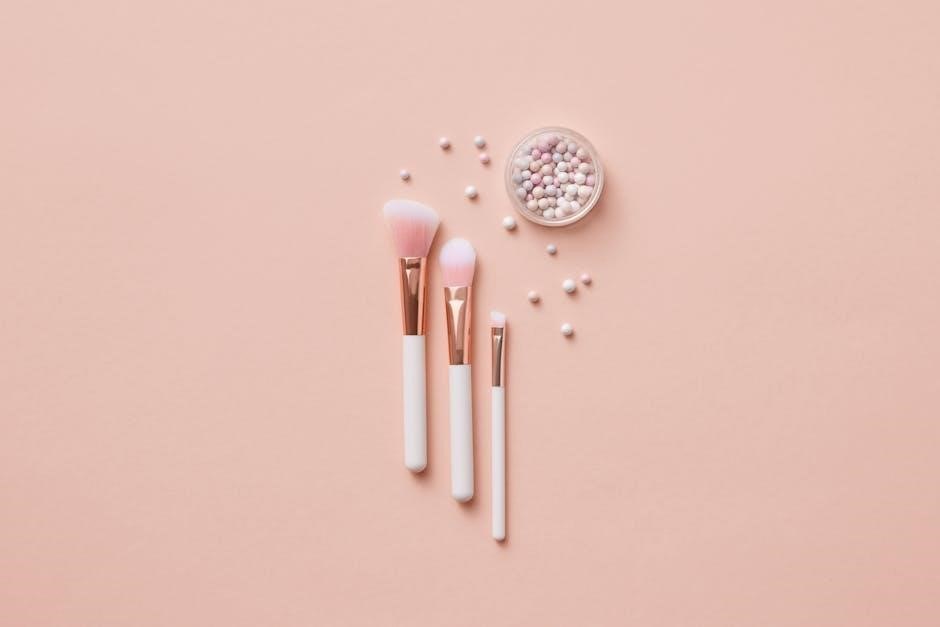
Makeup Brush Guide ― Article Plan (as of 04/28/2026 18:55:08)
This comprehensive guide details essential makeup brushes, covering foundation, color, eye, and brow application techniques.
Proper brush care, including cleaning and storage, will also be discussed.
Makeup brushes are vital tools for flawless application, offering precision and control unmatched by fingers alone. They elevate your routine, ensuring even coverage and a professional finish.
Why Use Makeup Brushes?
Employing makeup brushes significantly enhances application precision and overall makeup quality. Unlike fingers, brushes allow for controlled product placement, minimizing streaks and maximizing blendability. They contribute to a more hygienic routine, reducing direct skin contact and potential bacterial transfer. Different brush shapes and densities cater to specific product formulas and desired effects – from full-coverage foundations to subtle eyeshadow gradients.
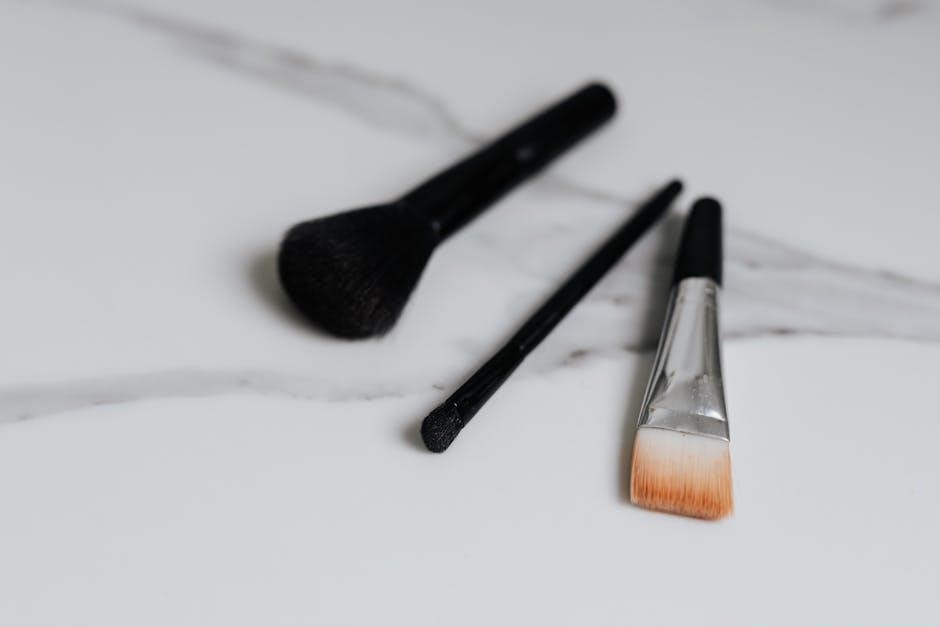
Brushes also help build intensity gradually, preventing overapplication and allowing for customized looks. A quality brush can seamlessly buff, stipple, or sweep products onto the skin, creating an airbrushed or natural finish. Furthermore, brushes are essential for achieving professional-level results, particularly with complex techniques like contouring and highlighting. Investing in a good brush set is an investment in your makeup artistry and skin health.
Brush Materials: Natural vs. Synthetic
Makeup brushes utilize two primary material types: natural and synthetic fibers, each offering distinct advantages. Natural brushes, traditionally made from animal hair (like goat, squirrel, or sable), excel at picking up and distributing powder products, providing a soft, diffused application. They possess a natural texture ideal for blending and creating a seamless finish.
Synthetic brushes, crafted from nylon or polyester, are excellent for cream and liquid formulations. They don’t absorb as much product, minimizing waste and facilitating even coverage. Synthetic options are also cruelty-free and more hygienic, resisting bacterial buildup. Modern synthetic fibers closely mimic the feel of natural hair, offering comparable performance. Choosing between the two depends on your preferred products and ethical considerations.
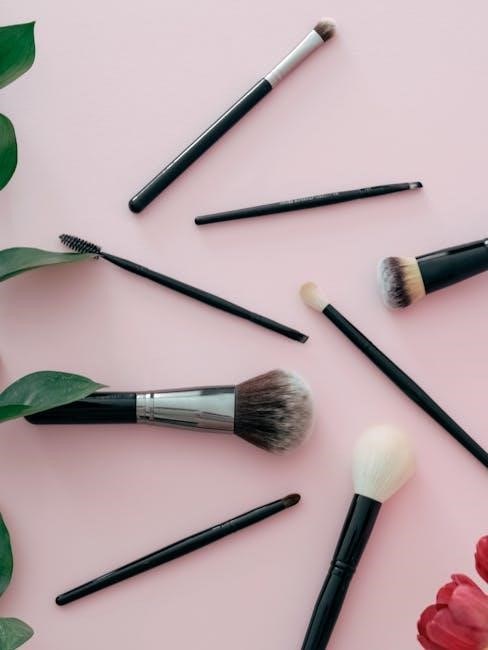
Face Brushes: Foundation Application
Foundation brushes come in varied shapes, each designed for specific coverage levels and finishes – from full coverage flat brushes to airbrushed stippling options.
Flat Foundation Brushes: For Full Coverage
Flat foundation brushes are your go-to for achieving a flawless, full-coverage base. These brushes, characterized by their dense, flat bristles, effectively distribute foundation evenly across the skin. They are particularly well-suited for liquid and cream foundations, allowing for buildable coverage to conceal imperfections and create a uniform complexion.
To use a flat foundation brush, apply foundation to the back of your hand, then pick up a small amount with the brush. Start applying the foundation to the center of your face – forehead, nose, chin – and blend outwards towards the hairline and jawline. Use sweeping or stippling motions, ensuring complete coverage. Remember to blend well to avoid harsh lines. For optimal results, consider lightly dampening the brush with water before application to prevent product absorption and ensure a smoother finish.
Round Foundation Brushes: For Medium Coverage
Round foundation brushes offer a more diffused and natural-looking application compared to their flat counterparts. Their rounded shape and typically less dense bristles allow for medium, buildable coverage, making them ideal for everyday wear or those who prefer a lighter feel. These brushes work beautifully with both liquid and cream foundations, providing a seamless blend without appearing cakey.
Application involves dabbing the foundation onto the face, starting from the center and working outwards. Utilize circular motions to blend the product into the skin, gradually building coverage as needed. The rounded shape conforms to the contours of the face, making it easier to reach areas like around the nose and eyes. Lightly stippling with the brush can also create an even, glowing effect. Remember to blend thoroughly for a natural finish.
Stippling Brushes: For Airbrushed Finish
Stippling brushes are designed to mimic the effect of professional airbrush makeup, creating a flawless, diffused, and incredibly natural-looking finish. Characterized by their dual-length bristles – a mix of longer, softer fibers and shorter, denser ones – these brushes excel at applying foundation with a light, even hand. They are particularly well-suited for liquid and cream foundations, allowing for buildable coverage without looking heavy or cakey.
The technique involves a “stippling” or tapping motion, gently pressing the brush onto the skin rather than sweeping it across. This creates a seamless blend and minimizes streaks. Begin by dabbing foundation onto the face and then use the brush to pat and blend in small circular motions. This method ensures even coverage and a beautifully polished complexion. Finish with a blending sponge for extra precision if desired.
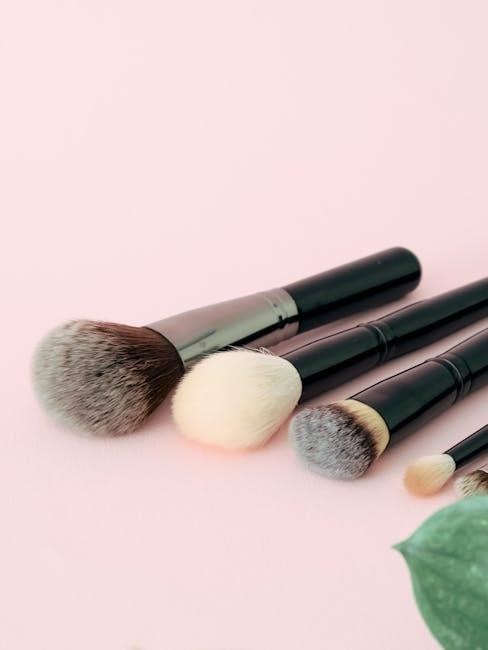
Face Brushes: Color Application
These brushes expertly apply blush, bronzer, and powder, enhancing your complexion with color and achieving a flawless, sculpted, or matte finish as desired.
Powder Brushes: Setting & Matte Finish
Powder brushes are indispensable for setting both cream and liquid foundations and concealers, significantly prolonging their wear time and effectively minimizing unwanted shine. A high-quality powder brush ensures a lightweight application, delivering a beautifully natural and consistently matte finish without disturbing the makeup already applied.
The size and exceptional softness of these brushes also render them remarkably versatile; they are ideally suited for applying bronzer or blush in a diffused, airbrushed manner, seamlessly integrating into any comprehensive makeup kit. They are crucial for achieving a polished look, preventing makeup from creasing, and maintaining a fresh appearance throughout the day. Selecting the right powder brush can dramatically impact the overall finish and longevity of your makeup.
Blush Brushes: Angled & Rounded Options
Blush brushes come in a variety of shapes, with angled and rounded options being the most prevalent. The choice between the two largely depends on the desired application and face shape. Angled blush brushes excel at sculpting the cheekbones, delivering precise color placement for a defined look. They are particularly effective for those who prefer a more contoured appearance.
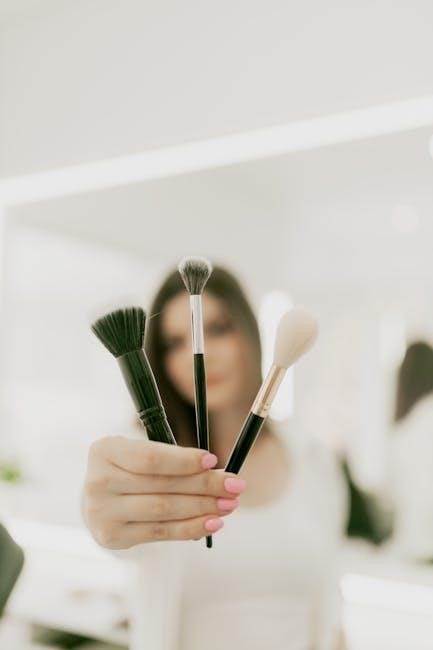
Rounded blush brushes, conversely, offer a softer, more diffused application, ideal for creating a natural flush of color. They are excellent for blending and building intensity gradually. Versatility is key, as a good powder brush can also be used for blush application in a diffused manner. Ultimately, selecting the right blush brush enhances the overall harmony and vibrancy of your complexion.
Bronzer Brushes: Achieving a Sun-Kissed Glow
Bronzer brushes are instrumental in recreating a healthy, sun-kissed complexion. The ideal brush for bronzer application is typically large and fluffy, allowing for a seamless blend. This prevents harsh lines and ensures a natural-looking warmth. A slightly angled shape can further aid in contouring, mimicking the natural shadows of the face.
Similar to blush application, a versatile powder brush can also effectively distribute bronzer. The key is to use light, sweeping motions, focusing on areas where the sun naturally hits – the forehead, cheekbones, and jawline. Remember to blend thoroughly to avoid any obvious demarcation. Achieving a believable glow relies on the brush’s ability to diffuse the product, creating a subtle and radiant finish.
Eye Brushes: Defining the Eyes
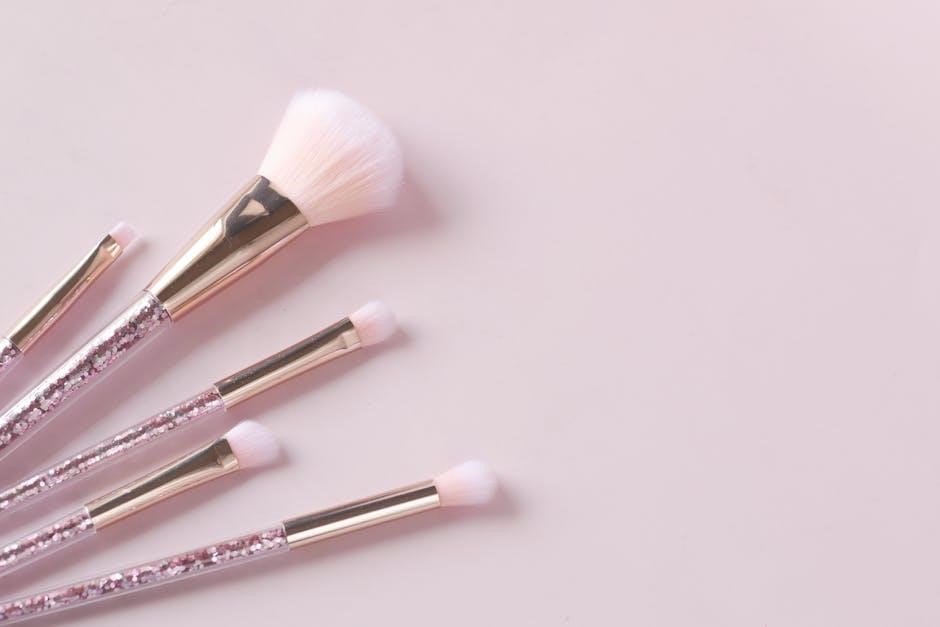
Specialized eye brushes are crucial for precise eyeshadow application, blending, and creating depth. These tools enable detailed work, enhancing and defining the eyes beautifully.
Eyeshadow Brushes: Blending & Packing
Eyeshadow brushes are incredibly versatile, serving dual purposes of both packing on color and seamlessly blending it out. Packing brushes, typically denser and shorter, deposit pigment directly onto the lid for intense color payoff. These brushes efficiently build up eyeshadow, creating a vibrant base. Conversely, blending brushes, characterized by their fluffier and more tapered shape, soften harsh lines and create a gradient effect.
Effective blending is key to a professional eyeshadow look, preventing a patchy or uneven application. Different blending brushes offer varying degrees of softness and control. Using a clean blending brush helps diffuse edges, ensuring a smooth transition between shades. Mastering both packing and blending techniques with the right brushes unlocks endless eyeshadow possibilities, allowing for customized looks ranging from subtle washes of color to dramatic, smoky eyes.
Crease Brushes: Adding Depth & Dimension
Crease brushes are specifically designed to fit into the natural contours of the eye socket, adding depth and dimension to any eyeshadow look. These brushes typically feature a tapered or pointed shape with soft, blended bristles. This precise design allows for targeted application of eyeshadow within the crease, creating a sculpted effect. Using a crease brush with a slightly darker shade than your lid color enhances the eye’s shape and makes it appear more defined.
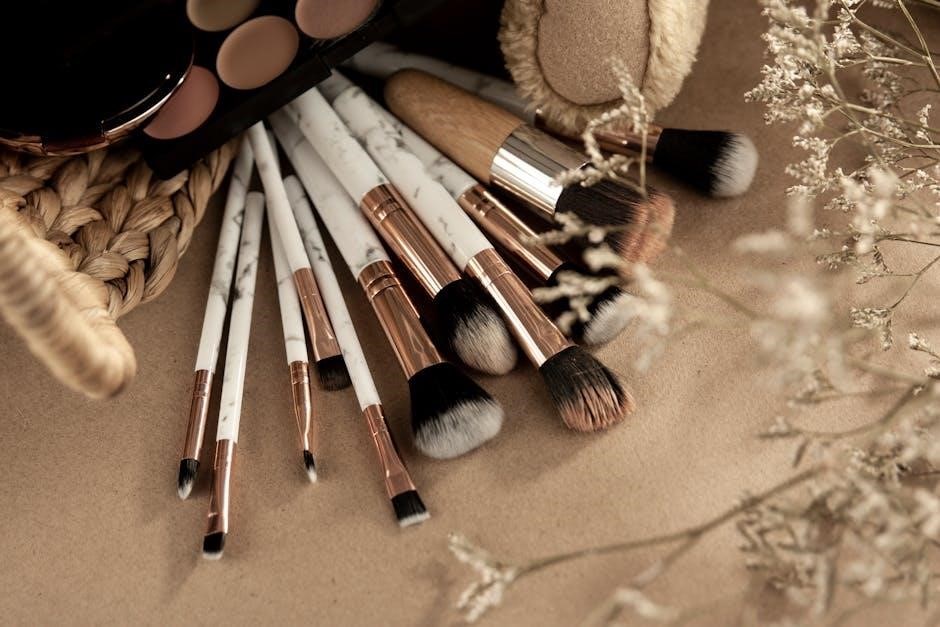
The key to successful crease application is using windshield-wiper motions, gently sweeping the brush back and forth. This technique ensures a seamless blend and avoids harsh lines. Different crease brush sizes cater to various eye shapes and desired levels of intensity. Mastering the use of a crease brush is essential for achieving professional-looking eyeshadow application and a more dramatic, captivating eye.
Eyeliner Brushes: Precision Application
Eyeliner brushes are vital for achieving sharp, defined lines along the lash line, offering greater control than pencils or gels alone. These brushes come in various shapes and sizes, each suited for different eyeliner techniques. Angled eyeliner brushes are ideal for creating winged liner or a classic cat-eye, while fine-tipped brushes excel at detailed work and tightlining – applying liner to the upper waterline.
When using an eyeliner brush, dip it into your chosen product (gel, liquid, or powder) and wipe off any excess. A steady hand and short, controlled strokes are crucial for a clean application. For a smoother line, use a brushing motion rather than dragging the brush. Proper brush care, including regular cleaning, ensures optimal performance and prevents product buildup, maintaining precision for flawless eyeliner every time.
Brow Brushes: Shaping & Filling
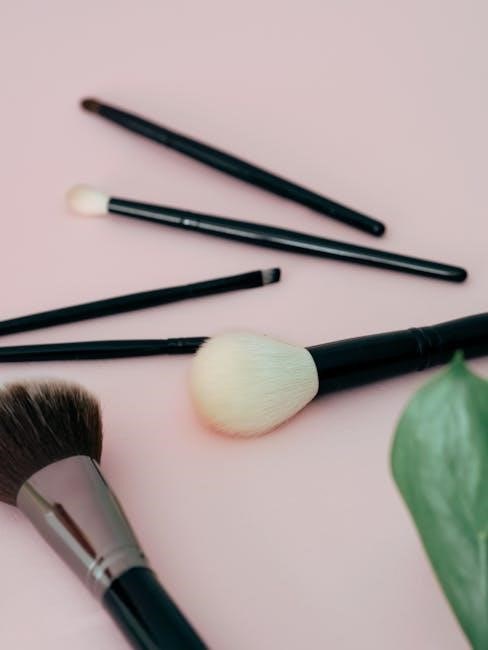
Brow brushes, often dual-sided, feature spoolies for grooming and angled brushes for precise filling of sparse areas, creating naturally defined brows.
Spoolie Brushes: Grooming & Blending
Spoolie brushes are indispensable tools for achieving perfectly groomed and natural-looking eyebrows. Resembling mascara wands, these brushes excel at several key functions. Primarily, they are used to brush through the eyebrow hairs, effectively separating them and shaping them into the desired form. This initial grooming step is crucial for identifying sparse areas that require filling.
Beyond shaping, spoolies play a vital role in blending eyebrow products, such as pencils, powders, or pomades. After applying color, gently brushing through the brows with a spoolie softens harsh lines and distributes the product evenly, creating a more diffused and realistic effect. This blending action ensures a seamless look, mimicking the appearance of natural brow hairs.
Furthermore, spoolies can be used before applying product to lift the brow hairs and set them in place, providing a subtle lift to the eyes. Their gentle bristles make them suitable for all brow types and sensitivities, making them a universally beneficial addition to any makeup routine.
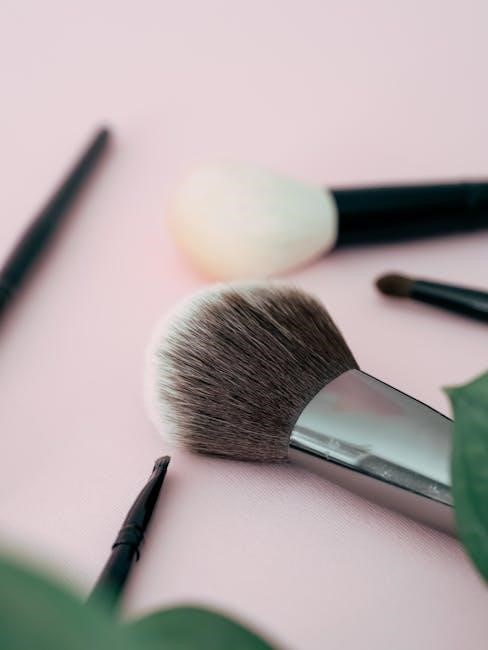
Angled Brow Brushes: Filling Sparse Areas
Angled brow brushes are specifically designed for precise application of brow products, targeting sparse areas with accuracy. Featuring a slanted, firm bristle head, these brushes allow for the creation of hair-like strokes, mimicking the natural direction of brow growth. This technique is particularly effective for filling in gaps and defining the brow shape.
The angled shape enables controlled application, preventing product from straying outside the desired brow line. Whether using powder, pomade, or wax, an angled brush delivers concentrated color exactly where it’s needed. For a natural look, use short, light strokes, following the existing brow hair pattern. Building up the color gradually ensures a more defined, yet subtle, result.
These brushes are a powerful tool for sculpting and defining brows, offering a level of precision that’s difficult to achieve with other brush types. They are essential for creating polished, well-groomed eyebrows that frame the face beautifully.
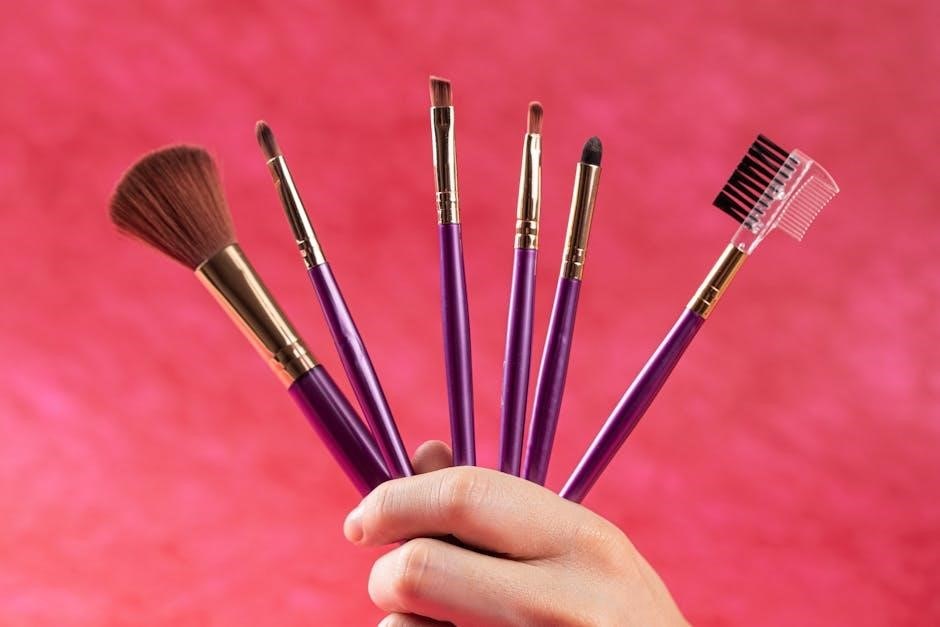
Brush Care & Maintenance
Maintaining clean brushes is vital for skin health and makeup application quality. Regular cleaning prevents bacteria buildup, extending brush life and ensuring optimal performance.
Cleaning Your Brushes: Importance & Frequency
Regular cleaning is paramount for maintaining both the quality of your makeup application and, crucially, your skin’s health. Makeup brushes harbor bacteria, oils, and product residue, which can lead to breakouts and skin irritation. Failing to clean them regularly creates a breeding ground for these impurities.
So, how often should you clean your brushes? Experts recommend washing brushes used for cream or liquid products (like foundation and concealer) at least once a week. These brushes accumulate product more quickly and are more prone to bacterial growth. Brushes used for powder products, such as eyeshadow and blush, can typically be cleaned every two to three weeks.
Don’t forget to consider the frequency of your makeup use; daily users will need to clean more often than those who apply makeup only occasionally. A quick brush cleaning spray can offer a temporary refresh between deep cleans, but it doesn’t replace thorough washing.
Drying & Storing Your Brushes
Proper drying and storage are just as vital as the cleaning process itself, ensuring the longevity and hygiene of your makeup brushes. After washing, gently squeeze out excess water – avoid twisting or pulling, which can damage the bristles. Lay brushes flat on a clean towel to air dry, with the brush heads extending slightly over the edge to allow for optimal airflow.
Never stand brushes upright to dry, as water can seep into the ferrule (the metal part) and loosen the glue, causing bristles to shed. Ensure brushes are completely dry before storing them.
For storage, consider a brush holder or organizer to keep them clean and readily accessible. Storing brushes with the bristles facing up helps maintain their shape and prevents water damage; Avoid storing brushes in airtight containers while damp, as this can promote bacterial growth.